Dear Guest
Thank you for visiting! est189 will soon be closing its doors (do forums have doors?) please visit the following thread - (to wail & cry perhaps?)
https://www.est1892.co.uk/forums/showthread.php?p=4002484#post4002484
Thanjk you.
Paul.S
I was expecting a few more kids to join the ranks though.
I think we have quite a lot of kids already and a few that are looking good. This summer was about strengthening the first team squad and getting rid of deadwood.
Also we did look at some, Coates isn't exactly old at 20, we looked at Bueno who is 17 and we signed that 18 year old American out of the blue.
Maybe we've signed others or focused on recruiting local kids but just aren't getting told about them because the club doesn't need to pass off kids as the next Messi anymore to keep us supporters content.
The only gracious way to accept an insult is to ignore it; if you can't ignore it, top it; if you can't top it, laugh at it; if you can't laugh at it, it's probably deserved.
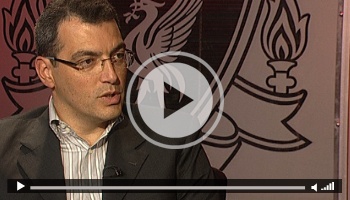
With the transfer window now closed until January, Director of Football Damien Comolli answers a wide-range of questions sent in by supporters in our exclusive interview.
First of all Damien, you've had time to reflect on your work in the transfer window - how pleased are you in terms of the movement of players both in and out of the club?
Well, we are very happy, but what we do during the season will decide how well we did in the transfer window. A lot of people are asking me the question 'are you happy with what you've done', I always say yes, but let's see where we are at the end of May and how well we have done in the league and in the cups.
Also, it's not a work for one season, it's a work for two, three, four seasons, especially when you are investing in young players, as we've done. It's this season and then the next one and then he next one, and hopefully we'll reflect back on the summer of 2011 - which was crucial, we knew that - and then we'll be happy with the work we've done.
How successful were we in signing the transfer targets we pinpointed at the start of the summer?
I would say very successful. Most of the players we got were our priorities, or were our top two priorities. Obviously I don't to get into individual cases but we've done what we wanted to do and almost more important than players, it's the positions, and we strengthened the positions we had to strengthen. Sometimes it was more difficult, like the left-back position - I think it's difficult for every club to find left full-backs - but we were very happy to get Jose the day before the first game of the season.
The two most difficult positions to fill in football are left full back and central defender because there is a shortage of talent worldwide, and that's why we're delighted to get the two we got in Sebastian Coates and Jose Enrique.
How many people from within the club are involved in the process of a transfer from start to finish and what are their different roles??
That's a short question but a very long answer.
It starts with the scouts who work on the ground to identify players for a year, or even two years, following the players, sometimes longer. Once the scouts have done the work it comes to me and then to Kenny, and then we decide if it's the right player. Kenny can say 'I like him', 'I don't like him', 'he can fit into my team', 'he can't fit into my team', 'he's what we need', 'he's not what we need', and then once the football decision has been made I will explain to the owners why we want to go after this player and what the financial consequences are.
We then start negotiating with the club and with the player, and sometimes that's the easy bit. It sounds very long and it is a long process but once we are negotiating with the club it can take days to sort out the paperwork. We are lucky enough to have a very, very good team on the administrative side of the football club, with Zoe Ward, the club secretary, and her team who have done a fantastic job during this transfer window. We had some difficult deals. We had a very difficult deal with Ajax back in January and getting Sebastian Coates from Nacional was very complicated and we had some late nights towards the end of the window. It's a long and complicated process.
Sometimes the negotiations can be very frustrating when you are stuck for several days on a small point, and suddenly it goes very quickly and you do a deal very quickly. I don't enjoy it during the process but I really enjoy it when it's done and the player signs. You can then see everyone is happy, Kenny is delighted, the owners are happy, the player is happy to be here and we know he's going to be an important player for the future, then the enjoyment is there.
How big is your scouting network and can you give us an idea of how the scouting process works and how it is coordinated?
We've got quite an extensive scouting network throughout the world. We have developed the scouting network in the UK a lot since I joined the club. We've got a lot of full time scouts abroad now as well, constantly going to competitions. Whether they are based in the UK and travelling to competitions or based abroad and covering their countries, we are talking about eight or nine full-time scouts based abroad and at least as many in the UK. Steve Hitchen coordinates our scouting abroad - he is English but based in France - and then we've got two senior scouts - Mal Hutchinson and Alan Harper - coordinating the UK scouting network.
Abroad they work from 16 to the first team and in the UK it's more 17/18 upwards. That's just for the reserve and first team. Then we've got a lot of scouts for the academy working both abroad and in the UK. It's very big locally, around Liverpool and the north west.
If a local scout sees a player he will go and watch him in different circumstances; home, away, good weather, bad weather. If he's an attacking player can he play wide right, wide left, up front, so he tries to cover all possible situations.
Once a player has been recommended by a scout one of the scouting coordinators will go and watch him and that's where I start to get involved, going to watch the player as well, gathering information and data on him. If everything is very positive then we take it to Kenny and say 'we are looking for a left back - we think he's the one or he should go on the list as number two, number three, number one etc'. From then we go to do the deal. It's a very long process.
You expressed in a recent interview following the closure of the window that you had explained to the owners incoming players would have to precede outgoing players. How did you convince the owners to accept this, how accepting were they and what was the reason for this approach?
Trying to 'convince' the owners is not the right way to put it. They are people who are used to winning in everything they've done. The question from them was 'how can we win?' What they say is they are here to win and if they want to win we had to turn things around quite quickly. They understood very easily that if we had to wait to sell players before getting players in then first of all it would take a lot of time to do, and secondly our main targets would more than likely be gone before we could turn around and say 'okay, now we are ready to go and buy this player'.
They got it very quickly, and I've got to say - and I've said previously - that you've got to be brave when you are an owner to accept that because if at the end we didn't sell the players we had to sell it would have cost the club and them a of money. That's why I think they were very, very brave. They understood the process very quickly and they said they wanted to take the chance because they wanted to turn things around. They said if we can dramatically improve the team by doing some business quite early and buying before we sell, we trust you and we trust Kenny, so let's do it.
How much of an input does the manager and his coaching staff have in any decision to sign a particular player?
A massive input because if there is a player Kenny isn't comfortable with then we'll never sign him. He's the one at the end who has to say 'I'm really comfortable with this player' and 'I like your recommendation' or 'I don't like your recommendation'. The input from Kenny is massive, probably the most important. Then there are ongoing discussions all the time with the coaching staff because Steve spent a lot of time at the highest level with other clubs, he played against a lot of players and his teams played against a lot of players in the Champions League and other competitions, so you'll always get input from the coaching staff as well.
When we looked at goalkeepers during the summer to bring in a number two behind Pepe, obviously John [Achterberg] had a massive input into that. I was giving him reports and DVDs and saying to him we had a choice. He's the specialist as the goalkeeper coach. I like to rely on goalkeeper coaches to tell us 'yes' or 'no' and to give their opinion because goalkeeper coaches will see things that nobody else will see. They've got this obsession with this position and I often say they speak their own language! I don't think we would have done anything on the goalkeeper side against John's advice.
Do you speak with the captain or other players about transfer targets?
It really depends on the player. Stevie, for instance, has played with Jordan Henderson, they've trained and played together at Wembley against France, so of course it wouldn't be very clever not to ask Stevie. I did ask him what he thought, how he is as a player, as an individual, is he a good trainer, how does he behave off the pitch, is he respectful, things like this. It was exactly the same in January talking to Stevie and the other England lads about Andy Carroll. The same thing with Dirk Kuyt, being Dutch, he knew a lot about Luis Suarez. You always ask for reference. I wouldn't say we ask for advice and ask one player whether we should sign a player, but the more dialogue and more communication there is the better it is.
We've had lots of fans asking why Raul Meireles was allowed to leave the club to sign for one of our rivals?
I think Raul said it himself with what I've seen recently in the press. Basically, he came to see me and said 'I want to leave, I want to play for another club'. Our intention was not to sell him but we were put in a corner a little bit when he put in a transfer request and said he wanted to go and that he didn't want to play for Liverpool anymore. I think the owners and Kenny have said it, and we all have the same view. When someone doesn't want to be here it's difficult to say 'you are going to stay'. We've been through that process in January with Fernando Torres and this felt like the same situation. We've done it, we think it was the right thing to do for the club, because it's very, very difficult to have somebody here who doesn't want to be here. The job of the manager in the Premier League is already difficult having to manage 25 players and only having 11 to start on a match day, so you have to deal with all the others. On top of that if you have someone who is adamant they don't want to be here and wants to play for someone else, we took the view it's better if he goes and we get the best possible deal for the club. In the end I think we did well.
We've also had a number of supporters wanting to know why Alberto Aquilani was allowed to leave on loan when he had impressed during pre-season?
With him it was more a question of opportunities to play. He's obviously a big player, he's got a very good resume and he's a very good player. But Kenny and the coaching staff felt he would play in a certain position. As I told Alberto during the summer, unfortunately in that position is someone called Steven Gerrard and it would have been difficult for Alberto to play. There were different reasons. There were tactical reasons, the fact he was playing in this position and also we felt it would have been very difficult to keep him here not playing regularly.
I've got to say I was very impressed with the way Alberto behaved throughout the process. He was really an act of class. He only wanted to play football. He was not obsessed about money or anything else and to be fair to him, I was very impressed by his attitude and his personality.
Is it true that we have first refusal on Eden Hazard as part of the loan deal for Joe Cole?
No, it's not true. I've seen those reports, but it's not true. He's a very good player, as everybody knows, but there's no truth in it.
Why have we loaned out Dani Pacheco?
Dani has gone on loan because we want to see him play in the first team somewhere. Last year he went to the Championship and had a good start, then he was sub for a few games, but he did well in those games. We know how well he can do at youth level, he did really well last year in the U19 European championships when Spain lost in the final against France, he did well at the U20 World Cup in Colombia in August, we were there and watched all the games.
The next step is 'can you show us what you can do in the first team?' It would have been difficult for him to play in our first team, and rather than play in the reserves we thought if there is an opportunity for him to go on loan to a good team in a top league, and we can see what he can do and if he can develop, it would be a good opportunity. That's why we took it.
I call it a development loan. Put the player on loan, see how he develops and then that will give us a very strong indication of where his career is going. It's a little bit like Peter Gulacsi, who is on loan at Hull City. We think Peter has got fantastic potential for the future, he's done extremely well with the U21s for Hungary, he captained the team, he played in the Toulon tournament at the end of May against very good teams and he was outstanding, and we felt that this year was important for him for his development.
We will monitor both of them very closely.
Clearly the squad has improved over recent months - but are there areas you are already targeting as needing further strengthening?
Not at the moment. We want to see how we're going to do. We are very, very pleased with what we've done during this window, and the previous one as well. For me it's like a big window from January until the 31st of August and in total we brought in nine players, we changed the team and changed the squad, so it's the time to reflect. To be honest with you I would really struggle to answer the question now and say we need something there or something there, because I think we have such a complete squad at the moment. Let's see how those players develop, how they gel together, how the young players like Sebastian Coates adapts, and then we can make a decision later.
People doubted whether a Director of Football would work at Liverpool - tell us how your relationship has been with Kenny Dalglish during this transfer window....
It has been excellent, not only during the transfer window but from the first day Kenny started we've enjoyed a great relationship at work, and even out of work. It's an ongoing process both before the start of the window and then during the window, talking every day, even if he's away and I'm in the office. Sometimes we talk several times a day because things can change constantly, you think there is a deal and then there is no deal or a club is interested in one of our players and then the next minute they are not interested anymore, so there's a lot of communication all the time, seeing things the same way.
There wasn't one time during the summer when we didn't agree on everything, whether it was players going out or players coming in. Also, because we prepared so much for the window in the last six months we knew before it started what we wanted to do. When you've done all the preparation it's almost a smooth process. We say 'we want him, him and him, they are our targets so let's try to go and get them'. Then it's just a question of timing. Kenny knew exactly what I was doing, when and why. I kept him informed through the progression of all the deals. We didn't change from our idea, we knew the positions we needed to strengthen and the players we wanted, so it was quite an easy process.
Towards the final stage of the window, obviously he knew we were following Coates, I had told him during the Copa America so he could watch him, we had two scouts over there so they were sending reports every time he played a game. Kenny could follow the progression of the player, how he was doing etc.
The relationship has been really, really good, not only during the window but overall.
Following on from BrooklynRed's post about Comolli and our summer funds, it got me thinking about our transfer strategy; we seem to put all our eggs in one basket.
Lecter has touched on it before; we are stubborn in our approach, which means we can potentially miss out on players (Wickham (Young maybe))and our transfer negotiations can go on for weeks (Adam, Downing - and to an extent - Henderson) and we appear to concentrate on one transfer, meaning getting all of our business done in a short space of time is impossible.
I keep reading about how we are back to the LFC of old, with everything done behind closed doors - and to an extent, we do - but certainly not our transfer targets. We knew in May who are primary targets were and it's no surprise to see Adam and Downing acquired with Enrique the only surprising absentee (currently).
People have talked about a deal being typical Comolli. Well, as a starter for ten, that worries me; we should not be obvious in our negotiations and other teams should not know what to expect when we approach a player. Secondly, we tend to focus on our target, losing sight of other objectives. Thirdly, we put an offer in that is borderline insulting, which then means the seller puts a ridiculous price tag on the player. As we work our way up to this price, this is were it goes one of two ways; we keep on going up till we are at their valuation anyway, or we realise that we are paying over the odds and refuse to budge.
Yes, I understand how negotiations work, but we are so obvious in our strategy, we either meet the high valuation or have spent so much time on the transfer, we lose out on the initial target and maybe someone else too. I also realise that I am not privy to the transfer dealings of Liverpool Football Club, but hell - if we can't discuss it on here, what's the point of a forum?
The commmon consensus is that we are building a squad to challenge the top four, get a place in the Champions League and approach a higher standard of players next season. I ask you, do you trust Comolli do secure the services of footballers of a higher calibre next year? Are you happy with a 50/50 (exaggerated) approach to transfers? Do you think we operate differently?
I think that those 3 British transfers were done early for a reason. Ie get an establishes British established spine as soon as possible, that who ever slots in later in the transfer window, will have to build in to that structure.
Sensible as far as I can see.
As for a top four team, I think that's the focus. With the money floating about with Chelsea and ManC, ManU already established, you have to plot out your spending.
Comolli helps to guide the statistical revolution at Liverpool
This Saturday will mark the anniversary of Fenway Sports Group's takeover of Liverpool and it comes just a few days after UK magazine FourFourTwo published its annual Football Rich List. The magazine ranked FSG owner John W Henry at 20th in the list, and calculated that each Premier League point Liverpool had earned since the purchase has cost Henry a whopping £7.5 million ($11.7M). (The team it beat last week, local rivals Everton, comes in at £48,000 per point, given that owner Bill Kenwright paid £20M for it in 2004.)
Of course, this calculation is skewed and FourFourTwo accepts it is meant as just a bit of fun. But it can also act as an interesting backdrop to Henry's first year in charge, and the application of "Moneyball" or rather 'Soccernomics' theories in football. 'Moneyball', now a film starring Brad Pitt, is the Michael Lewis book in which Oakland A's general manager Billy Beane uses statistics to find previously underestimated players in the transfer market to help his team become champions. "Soccernomics," the football equivalent, advocates data analysis to give teams a competitive edge, not just in recruitment but also in contract management, penalty shootouts, and injury prevention.
While FourFourTwo's figures suggest that not everything the data tells you is helpful, Liverpool's director of football Damien Comolli might not agree.
He is evangelical in his use of data in football, and says now that no major decision at the club is taken without seeing what the stats say. When it works, it can be a great success: as proven by forward Luis Suarez, the new hero at Anfield whose £23 million ($35M) transfer fee is now widely seen as a bargain.
"For Luis, I looked at the stats over the last three years, notably the number of games played which is an important factor," he told France Football earlier this year. "We turn enormously toward players who don't get injured. We also took into account the number of assists, his performances against the big teams, against the smaller clubs, in the European Cup, the difference between goals scored at home and away."
Left back Jose Enrique was another signing backed by the data: when Liverpool missed out on Gael Clichy (whom, when 17 and after a handful of games for Cannes, Comolli had discovered for Arsenal), Comolli drew up a shortlist and noticed that Enrique's statistical figures were impressive, more so than the scouting reports on him. He was also cheaper, in terms of transfer fee and salary, than Clichy. With Enrique one of Liverpool's standout performers thus far this season, it's further evidence that Comolli's methodology has worked.
If only it were always that easy. When a signing doesn't come off, as in the case -- so far, it has to be said -- of Andy Carroll, who cost Liverpool £35M ($54M) in January, and has scored four goals in his first 17 appearances for the club, the whole system is blamed. Comolli bristles at any mention of Carroll in this context, though he did previously admit to Infosport that Suarez had originally been signed to play alongside Fernando Torres, and not Carroll. The problem is that what works for one player might not work for another.
Take this interview with Leaders in Performance last May: "The first thing we used to look for is the talent, but not anymore," Comolli said. "What we want is a talented player but with the right attitude and intelligence. Is he a team player? Is he intelligent enough that he puts himself at the disposal of the team? We need to look a lot more at the psychological aspect of the player, the attitude of the player, the mentality of the player on the pitch than we used to." While that explains why Liverpool wanted Suarez, it also makes Carroll's arrival a little surprising, given the reservations by some scouts about his "attitude and mentality" before he joined.
Comolli's backers, quite reasonably, point out that Suarez and Carroll combined cost almost the same as the sales of Fernando Torres (£50M/$80M) and Ryan Babel (€7M/$9.5M) generated, while Henry has claimed that Carroll's value is actually Fernando Torres less £15M ($23M). That seems disingenuous -- if Torres had joined Chelsea for £25 million ($39M), it's unlikely Newcastle would have sold Carroll for £10 million ($15M).
"Value" is the magic word here: "The whole principle is about creating value, and managing to find a player in the market who is underestimated financially compared to his stats," Comolli told Les Specialistes. The problem with value, as Paul Kelso pointed out in The Daily Telegraph, is that "it is not obvious [to find value] when you are trying to buy a center forward on deadline day in January".
However, it's important to note that "Moneyball" theory does not preclude big-money signings in positions of key value (after all, Henry's Boston Red Sox have spent the second-highest amount in the last decade in Major League Baseball). Comolli sanctioned the deal for Carroll because his age (22), English nationality and rare physical traits had already made him one of Liverpool's primary transfer targets.
Comolli himself never made the grade as a professional player: he was in the youth team at Monaco but found his path blocked by the likes of Lilian Thuram and Emmanuel Petit. At 19, he was coaching Monaco's U-16 team, before Arsene Wenger, then coaching Nagoya Grampus Eight, persuaded him to move to Japan and coach the goalkeepers at Nagasaki U-18s. One year later, he was working for Wenger at Arsenal, as a scout covering Europe.
It was Wenger who first ignited Comolli's commitment to statistics, after the coach noted Manchester United had the best percentage of successful passes in the opposition half and that Roy Keane won the most one-on-one challenges in the Premier League. "Now you know why they win," Wenger told him.
"The revelation came from reading 'Moneyball', that's when everything fell into place," Comolli told France Football. "Thanks to someone I know, I became friends with Billy Beane, the hero of the book, and ever since 2005 I have worked enormously on that." Just as his friendship with Beane was developing, he became Spurs director of football in September 2005. In three years at White Hart Lane, Comolli signed 26 players, eight of whom are still there now. The successes include the likes of Gareth Bale, Luka Modric and Benoit Assou-Ekotto; the flops, David Bentley, Gilberto and Hossam Ghaly.
Paul Tomkins, in Pay as You Play: The True Price of Success in the Premier League Era, calculated that of Comolli's signings, around 30 percent were big profit-makers, and 25 percent flops, with the rest somewhere in between, with an "overall estimated genuine profit of £26.5M ($41M)". It was Comolli's work at White Hart Lane -- as well as a ringing endorsement from Beane himself -- that convinced Henry to hire him.
Comolli has denied the claims of Soccernomics author Simon Kuper that there is a power struggle with Liverpool manager Kenny Dalglish. "Comolli is very close to Beane, who is bringing Moneyball to football, while Dalglish is an excellent manager on gut feel," Kuper told The Score last week.
Comolli, quite reasonably, insisted that so much summer business could not have happened had the two men disagreed. On top of the players brought in, Liverpool sold 14 players and moved out another nine on loan: in some cases, like Christian Poulsen and Milan Jovanovic, it bought out the player's contract and in others, like Joe Cole, is still subsidizing his salary.
One French reporter who knows Comolli well suggested that the summer deals were an expensive compromise: Comolli wanted young players knowing their value would increase, while Dalglish wanted British players. The result: almost £50M ($80M) spent on Jordan Henderson, Charlie Adam and Stewart Downing.
In any case, Comolli knows all about power struggles: in his last job at Saint-Etienne, the club's joint-owners were constantly at war with Comolli stuck in the middle. Bernard Caiazzo was the businessman who liked big-name players and enjoyed the attention that comes with owning a club, while Roland Romeyer preferred hardworking players, spoke like a supporter, and was happier in the background. The pair bickered nonstop and the club only just survived relegation. After Comolli left, Saint-Etienne changed its administrative structure and results immediately improved. (That spell also explains why he gets very little credit, and still has a relatively low profile, in France.)
Martin Jol also blamed Comolli for his failure as Tottenham Hotspur coach. "Comolli was responsible, he was responsible for most of the football things," Jol told a news conference after his recent appointment as Fulham coach. It's true that Comolli had bought Darren Bent and Didier Zokora against Jol's wishes, but the club still finished fifth in successive seasons. It was only after Jol's fallout with Dimitar Berbatov, which coincided with Spurs' worst start for 19 years, one win in 10 league games, that the Dutchman was dismissed in October 2007. Comolli's choice as successor was Juande Ramos (who at Sevilla had brought out the best in Fredi Kanoute, a player that struggled under Jol at Spurs) but 13 months and a League Cup trophy later, both men had left the club.
The other lesson Comolli took from Wenger, which is another part of the "Soccernomics" remit, is to always replace your best players while they are still there. (Wenger did this by signing Emmanuel Adebayor before Thierry Henry left, Robin Van Persie before Dennis Bergkamp left, Mathieu Flamini before Patrick Vieira left and he has done the same with Jack Wilshere and Cesc Fabregas.) The Torres deal was done too quickly for that to happen, while it remains to be seen whether Jordan Henderson could prove to be a long-term replacement for Steven Gerrard, or Sebastien Coates for Jamie Carragher.
If you add Stewart Downing to Suarez and Enrique as successful purchases so far, you can sympathize with Comolli's reaction whenever Carroll is brought up. He may not like it, but Comolli knows it's the fate of the sporting director to be remembered for his flops.
And even if Carroll does struggle to improve, Comolli is already helping Liverpool to a profit on and off the pitch. On Saturday, Liverpool welcome Manchester United to Anfield, 12 months to the day that FSG bought the club. One year on, the mood is better, the squad is trimmer, and the future is brighter. Comolli has played his role.




Comment