
Originally posted by danperkins
View Post
-
The fact they're supposedly willing to offload Schurle and Salah without a second thought is what's really annoying. These were players that could have had good careers at Liverpool but instead were swallowed up and spat out by Chelsea. -
Re cuadrado, just seen his current manager is Vincenzo Montella....a champ man am/flc iirci own everton fans on the internet....that's what i doComment
-
There are rumours of a big-money Spurs swoop for Everton’s highly-rated central midfielder James McCarthy.
The Irish 24-year-old became the second-biggest signing in the Toffees’ history when he moved from Wigan at the end of the summer 2013 transfer window.
According to the Express, Tottenham will face competition from Manchester United and Arsenal for McCarthy, but Pochettino is hoping for success with a £20m cash-plus-player deal involving either Younes Kaboul or Aaron Lennon.
In a move came very close to happening for Liverpool at this time last year, Tottenham now look favourites to sign the 25-year-old Ukrainian winger Yevhen Konoplyanka.
The reported £7m deal with Dnipro comes in response to a season of disappointing wide-man performances by the likes of Andros Townsend, Eric Lamela and Aaron Lennon.
Meanwhile, Kyle Naughton has been unveiled as a Swansea player, the Standard reports, after the Welsh club agreed a £5m deal with Tottenham for the 26-year-old. The right-back is believed to have signed a three-and-a-half year contract after Spurs deemed him surplus to requirements behind Kyle Walker and versatile youngster Eric Dier.
That rug really tied the room together.Comment
-
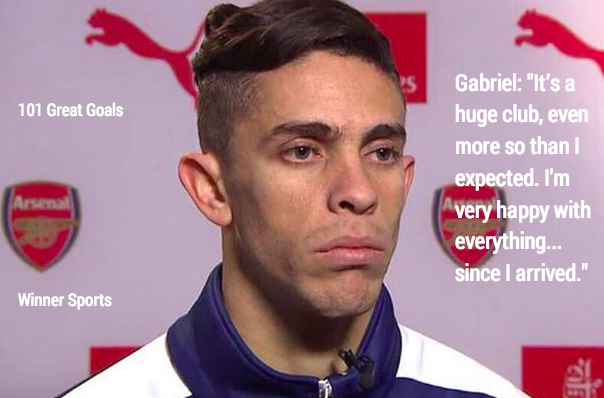
Gabriel Paulista joining Arsenal with Joel Campbell going the other way to Villareal on loan.Comment
-
West Brom have signed Callum McManamananaman.Thanks very much for being ‘This Mornings’ Farmer’Comment
-
Originally posted by Shaggy View Post Always borrow money from a pessimist. He won’t expect it back. Oscar Wilde
Comment
-
-
****s with his hair?

 Thanks very much for being ‘This Mornings’ Farmer’
Comment
-
Inspired by Dennis Wise by the look of things.Comment
-
you won't see him and Dennis wise out at the same timeOriginally posted by Shaggy View Post
Comment
-
Jay Spearing has moved from Bolton to Blackburn on loan.That rug really tied the room together.Comment
-
How transfer deals really work - 10 steps from scouting to signing
We've all done it.
We’ve all played Football Manager, we’ve all done our homework and decided that this player is the one. We’ve scouted him, checked out his stats, worked out our budget and slapped in a bid.
We’ve heard his club’s demands, heard the player’s demands, matched both and finalised the deal.
Easy.
Real life, though, tends to be a little more complex. And as the clock ticks towards the end of the January transfer window (it actually ends at 11pm on Monday, Feb 2 this year), expect to see deals going through at an increasing rate over the next few days.
How, though, are football transfers actually conducted? ECHO sports writer Neil Jones has taken a good look at the anatomy of a modern transfer deal.
1. The scouting
Probably the most mysterious element, but absolutely crucial. After all, if you want to make sure a transfer is a success, it helps to start by having the right player involved.
Football scouting is an evolving industry. The days of the old-school scout, making instinctive judgements from the stands, are not quite over, but they are fading, particularly at the top level.
Many clubs now use computer programmes, such as Scout7, to gather detailed statistical analyses of players. Videos are uploaded within minutes of a game finishing, enabling a manager, head of recruitment or director of football to run the rule over a player from the comfort of his office.
Additionally, the political element is key.
Scouts in the field now spend almost as much time gathering intelligence off the field as they do watching a player on it; speaking to agents, forging relationships with a player’s family and friends, and doing their best to stay a step ahead of their rivals. Few industries are more competitive, or, in football terms at least, more important.
2. The bid
So once a player has been identified, the next step is the transfer (or loan) offer. Pretty straightforward, you’d think, but there is more than one way to start a transfer.
The most obvious is for a buying club to submit a formal written offer for a player, seemingly by fax even in this day and age, which will then be considered by the selling club.
But it is just as common for clubs to contact trusted agents to act on their behalf, either in finding an available player from another club, or finding a buyer for their own unwanted player.
These agents act as intermediaries between the buyers and the sellers, and can set the wheels in motion for a deal that otherwise may not have been struck.
3. Tapping up?
Premier League rules state that “a player under contract shall not directly or indirectly make any approach to another club without having obtained the prior written consent of the existing club to who he is contracted.”
Basically, that all transfer deals should be started from scratch.
Reality, of course, is different. Rarely will a bid be submitted for a player, without the buying club having contacted the player’s representatives to see if he would be interested in a move, and if so what kind of wages he would be after.
Frowned upon? Certainly, but it is pretty much common practice across the game.
The bulk of a deal is often set up before a fee has been agreed between the buying and selling clubs.
4. The negotiations
For those of us in the media, transfer stories provide stock phrases, which are almost becoming cliches. “Preliminary talks,” “advanced discussions”, “talks ongoing”, “personal terms”, “showdown talks” - the list is growing.
Such phrases evoke images of a group of people – players, agents, chairmen, managers – sat around a table sliding pieces of paper with figures on them to each other, to be greeted by a shake of the head and an ‘add a nought on to that and come back, matey.’
Again, the reality is very different.
‘Negotiation’ meetings are often brief, with an agent laying out a player’s demands, and an official (usually the chief executive, the head of recruitment or the director of football) giving the club’s side of things.
Issues which arise during negotiations often relate to, of course, salary, bonuses and signing-on fees, as well as personal and social considerations.
Players often leave the negotiations to their agents, and are kept abreast of the situation from afar. They usually meet with a manager before a deal goes through to discuss how he would fit in at his potential new club - and if they don’t, then they’re taking a huge risk - but in terms of sitting round a negotiating table discussing figures? Rarely.
5. The players’ dilemma
This is the age of ‘player power’ in football, and there is little doubt that in transfer deals, it is they who hold the key.
Fair enough, some would say. After all, it is their lives who will change. Considerations for a player prior to a transfer include how much playing time they would get if they moved clubs, whether they would need to re-locate (or learn a new language), whether they would be happy to work for the buying club’s manager and, particularly as you go down the leagues, the length of contract. Players, like anyone, want security.
And, of course, there is also the financial aspect. Wages play a big part in any job decision, and in football the sums are vast, and still on the up.
Chelsea paid a vast sum of money for Fernando Torres, but the deal didn't work out for the player who struggled to find formChelsea paid a vast sum of money for Fernando Torres, but the deal didn't work out for the player who struggled to find form
“Often, it comes down to how strong the player’s position is,” says ECHO columnist and ex Liverpool striker Neil Mellor.
“If he’s settled and playing regularly, it will cost more to get him out. If he’s out of the team and desperate to move, then some of his power goes.
“In my career, I turned moves down because I didn’t want to move to certain parts of the country, or to work for certain managers. Those things all go through your head, definitely.
"It’s a short career, and making the wrong decision can cost you.”
6. The agents
Often held up as the enemy of football, agents in truth suffer from a familiar problem; the conduct of a few bad apples ruining the whole batch.
In reality, agents are an important part of the game, particularly at this time of year, and good ones are valued, by both players and clubs. As stated, agents can be used by clubs to identify players, or to find clubs for players they are looking to sell. Their network of connections is often a valuable tool for managers, from the highest level down.
They also, theoretically at least, should ensure players are able to focus on their football, without having to concern themselves with contract negotiations and discussions. A good agent should be as much a mentor and a confidante as a negotiator. They earn, mind.
For the 12 months up to September 2014, Premier League clubs paid a record £115m in agents’ fees, with Chelsea alone responsible for £16.8m of those (Liverpool paid £14.3m, Everton £5.8m).
“My number one concern is my player,” says Neil Sang, a Liverpool-based agent who represents a number of players. “I listen to what my player wants, and then try to make it happen as best I can.”
7. The media
The relationship between the media and the transfer window is very much love-hate. They love it because the stories keep them knee-deep in copy, but hate it because sifting through the garbage is an arduous and often disheartening process.
Regularly, reporters will receive tip-offs about potential transfers, often via agents but sometimes from other sources. The famous ‘taxi driver from the airport’ is usually prevalent at this time of year, while any number of elite international players can be spotted heading towards Finch Farm or Melwood.
Or the Lobster Pot, in more extreme cases.
8. The medical & the work permit
The final hurdles in a deal are the medical and, for some players, the work permit. Medicals at top-level clubs are stringent, carried out at the training ground – Liverpool also carry out tests on players at the Spire Hospital in Mossley Hill - and often well publicised through club’s official media channels.
But as time ticks away on deadline day clubs, naturally, have been known to take gambles. Liverpool, for example, signed Andy Carroll in January 2011 while the striker was sidelined with a thigh injury. Basically, if both club and player want a deal to go through, then it will.
Work-permits, meanwhile, are needed for any player over the age of 16 who does not own an EU passport.
The buying club, basically, agrees to sponsor the player to be in the UK. A certificate of sponsorship is then produced by the club, which is submitted to the FA. The FA will grant the work permit if the player has played 75% of competitive games for a FIFA-ranked top 70 nation over the past two years.
Failure to meet this requirement will see an application rejected, unless it can be proven a player was unavailable for selection due to injury. A club may appeal if their first application is rejected, with a panel convened to establish whether, in its view, the player’s transfer would be of benefit to the game in the relevant country. Arsenal, for example, successfully persuaded the panel to grant Gabriel Paulista, an uncapped Brazilian, a work permit for his move from Villarreal this week.
9. The drama
It is a question that always gets asked when deadline day rolls around. Having had a month to get deals done (more if it is a summer window), why do we find so many clubs scratching around at 10pm with an hour before deadline?
Why do we have footballers, like Gareth Barry before he moved on loan from Manchester City to Everton, sat in their cars with a coffee and Candy Crush, waiting for the green light to go and finalise their transfer? Why have we got Harry Redknapp ringing up Niko Kranjcar like a broken-hearted lover, asking him to save him every single January?
Drama addicts? Possibly. But the biggest factor about deadline day, especially in January, is how much of a domino effect is in operation. Clubs try to plan as best they can, but one transfer leads to others – Barry’s Everton deal, for example, was dependant on Marouane Fellaini moving to Manchester United, while Liverpool signed Andy Carroll because Fernando Torres left for Chelsea.
Additionally, a sudden run of poor form (or injuries) can lead to panic, particularly if a club is battling relegation, or chasing promotion. The risk of not adding to your squad when there are four months left in the season, is deemed too big to ignore. Hence the “panic-buy” signings on the final day.
A club that is suddenly stripped of its star man late in the window, as Liverpool were with Torres, has to act fast, and that creates a knock-on, and a fair bit of drama too. Too much for Jim White to handle, at times.
10. Done deal!
And there you have it.
The fee is agreed, the personal terms are agreed, the medical is done. All that remains is to lodge the signed and sealed, finalised paperwork with the Premier League and the FA...
….Oh, and to make sure you get the obligatory smiling photo of the player with his new manager, and his new club’s shirt.
Simple, eh?Originally posted by fah-qComment
-
Hull City are in talks with Aaron LennonComment
-
http://www.football365.com/topical-t...ary-Panic-Buys...
Worst January Painc buys................unsurprisingly, we're involved in the top two.
10) Felipe Caicedo (FC Basel to Manchester City)
When Sven-Goran Eriksson made the decision to pay £5.2m to FC Basel for striker Felipe Caicedo, the Ecuadorean joined a glamorous list of forwards at Manchester City that included Emile Mpenza, Rolando Bianchi, Darius Vassell, Georgios Samaras and Benjani. That's why City supporters look at Sergio Aguero now and go all weak at the knees. Well, that's one of the reasons City supporters look at Sergio Aguero now and go all weak at the knees.
Caicedo was actually quite liked by fans for his efforts and endeavours, but his goal return failed to convince anyone that he was the answer to City's scoring needs. Sold to Lokomotiv Moscow three-and-a-half years later after three separate loan spells, he can now be found at Espanyol, still aged just 26.
9) Lee Bowyer (Leeds United to West Ham)
Don't think that this is simply a list of those who cost a great deal only to immediately turn utter toss. There's plenty of that, of course, but West Ham paid Leeds just £300,000 for England international Lee Bowyer in 2003. Signed on a six-month deal which meant Bowyer would be released if the club were relegated, supporters immediately questioned his motivation.
However, that was not their biggest concern. Despite Bowyer being acquitted for his part in an attack on Sarfraz Najeib in Leeds city centre, supporters protested during Bowyer's unveiling, displaying yellow cards that read 'West Ham fans united against racism'. In 1996, Bowyer was convicted of affray after throwing a chair at Nizam Hannan, an Asian employee in a McDonalds restaurant.
"What message does this give to the local community?" a leaflet distributed said. "How are we to attract black and Asian fans to the Boleyn when we sign someone like Bowyer?" As it happened, Bowyer was hampered by injuries, West Ham were relegated and he departed that summer.
8) Nigel Quashie (Portsmouth to Southampton, Southampton to West Brom)
It's hard not to feel sorry for Mr Relegation. After all, a footballer can't help but generate interest, even if it is entirely unfathomable.
Quashie's first nomination came when he followed Harry Redknapp from Portsmouth to Southampton, inexplicably signing a three-and-a-half-year deal for a fee of £2.1m. He failed to make an appearance until February after injury and was promptly made club captain by Redknapp after the departure of Jason Dodd. Quashie's popularity sunk to a nadir following Southampton's relegation.
Ridiculously, the following January Bryan Robson decided to pay £1.2m to bring Quashie back up to the Premier League. "He is intelligent, has good stamina and is a very good passer of the ball," was Robson's assessment. "He has got the experience now of relegation fights and playing in the Premiership."
Quashie got a five-game ban for abusive language in addition to being sent off, West Brom were relegated, and Quashie left the next January. Fool me once, shame on you. Fool me twice, shame on Bryan Robson.
7) Georgios Samaras (Heerenveen to Manchester City)
Arsene Wenger is very keen to tell you about all the world-class players that he spotted and almost brought to Arsenal, but the next time you see him, ask about how close he came to signing Georgios Samaras after missing out on Julio Baptista to Real Madrid.
Instead, the striker stayed at Heerenveen for an extra five months and joined Manchester City in January 2006 for a fee of £6m. Samaras started well, scoring four goals in his first six appearances, but then scored eight more in 66 matches at the club, criticised by manager Stuart Pearce for his lack of strength.
Samaras would eventually join Celtic for around £1.5m, where he offered the most compelling evidence yet for the dearth of quality in the Scottish Premier League: 53 goals in 171 league games.
6) Jean-Alain Boumsong (Rangers to Newcastle)
Graeme Souness' tenure at Newcastle was an altogether grim affair, but the lowest ebb must have been when the Scot chose to pay £8m to Rangers for Jean-Alain Boumsong, a defender who had signed for the SPL side on a free just six months previously. So strange was that decision that the transfer was investigated by the Quest team looking into allegations of transfer bungs, as reported by the Daily Express.
No charges were ever made, so we must conclude that this was stupidity over foul play. Boumsong blamed his poor form on personal problems, joining Juventus (then in Serie B) for a fee of around £3m just 18 months later. His Wikipedia page starts with the boast that 'he is known for his physical strength, pace and reading of the game'. Citation needed.
5) Christopher Samba (Anzhi Makhachkala to QPR)
We should have been surprised when a club threatened with relegation spent £12.5m on a central defender in January but, y'know, this was Harry Redknapp at QPR, so the commitment to financial f**kery was never in doubt.
"Chris is just what we need. He's a monster. Great in the air, quick, a leader, strong, fantastic in both boxes, hard as nails. He's a proper centre-half," said Redknapp, ticking every racial stereotype and blokey football sentiment box in one swoop. "He was willing to take a massive pay cut." Oh good, we've called house on our 'Arry bingo card too.
As it happened, the BBC reported that Samba was earning £100,000 a week at Loftus Road. "Fed up with the money tweets, get over it," was the defender's response to social media criticism from supporters. QPR were promptly relegated, and Samba immediately rejoined Anzhi Makhachkala. Anzhi are, uncoincidentally, the only club to display a looser attitude to economic sense.
4) Afonso Alves (Heerenveen to Middlesbrough)
"Yeah great, thanks Afonso," said every Eredivise striker since 2008. "Now part of everyone's mind will worry that we'll be completely woeful when we move abroad. Thanks for nothing."
Alves is the pits, the yardstick by which every signing from the Dutch league must be judged. "He might be a Suarez," you whisper quietly to your friends. "Or he could be an Alves," you think to yourself.
The Brazilian striker scored an extraordinary 45 goals in 39 league games for Heerenveen after moving from Malmo, persuading Middlesbrough to part with a club record fee of £12.5m. He promptly underwhelmed for large periods, scoring four league goals in his only full season as Boro were relegated. At that point he joined Qatari side Al-Sadd, who paid £7m for his services. Presumably Nick Leeson was responsible for their financial decision-making.
3) Savio Nsereko (Brescia to West Ham)
When Savio Nsereko arrived at West Ham in January 2009, he was intended to symbolise a new era at the club. Gone were Carlos Tevez and Javier Mascherano, in was a Germany U20 international named player of the tournament at the U19 European Championships. The fee was £9m, a club record.
Savio played just ten matches in England, all as a substitute. Nothing seemed as it had first appeared, with Karren Brady remarking that she was investigating the deal soon after joining the club. The move had been sanctioned by sporting director Gianluca Nani, who had known Savio from his time at Brescia.
The forward's career promptly dwindled, the Ugandan-born striker suffering with mental health issues. It was reported that he had been charged with faking his own kidnap when in Thailand, and he now plays for FC Atyrau of the Kazakhstan Premier League. He is still just 25.
For never was a story of more woe / Than this of West Ham, and their Savio.
2) Andy Carroll (Newcastle to Liverpool)
For use whenever someone questions his success in the transfer market, Rodgers would be forgiven for carrying around a picture of Andy Carroll in his inside pocket, unfolding it and holding it up whilst loudly exclaiming "Remember the last guy?"
Some transfers sour over time and some promise much but deliver little, but Carroll's move to Liverpool was neither of these. The striker had scored 14 top-flight goals in 41 matches, and was moving for £35m - even Anfield season ticket holders knew a b**lock had been dropped.
Carroll's move was a total flop, only slightly redeemed by the £16m West Ham paid for his services after he had scored seven goals in 24 matches in a loan spell. He scored six goals in 44 Premier League games for Liverpool.
1) Fernando Torres (Liverpool to Chelsea)
Oh what more can you say?
When all of the world is dust, a nuclear apocalypse wiping out all semblance of life from our earth, it will stand for eons in dusky darkness. When alien lifeforms finally make it to our now desolate abode, two explorers will be beamed down to investigate the possibility of habitation.
As the duo of misshapen creatures begin their task of discovery, one of them will spot a small stone, stood ten feet away from two larger rocks which stand a similar distance apart from each other. The creature will approach to the small stone, before aiming a kick with one of his tentacles.
Rather than sending the stone between the two large rocks, it will instead trip and fall backwards, sending the stone rolling only two feet away from where it once stood.
"Lol," the second explorer will say. "That was worse than Torres.""I will make the boys feel your support"
Jurgen Klopp June 2020Comment
-
Tee
Crystal Palace have agreed a deal to sign Manchester United winger Wilfried Zaha on a permanent basis, Goal can reveal.
Zaha, who has made 16 league appearances since joining Palace on loan in August, will now finalise personal terms ahead of an official announcement on Monday.
United have decided to offload the 22-year-old, who was initially brought to the club in a deal arranged by Sir Alex Ferguson, with Louis van Gaal unconvinced that he has a long-term future at Old Trafford.
Since signing for United back in January 2013, Zaha has been almost non-existent in the first-team, spending last season on loan with Cardiff City, after having had a furious exchange with then-manager David Moyes, before rejoining Palace in the summer transfer window.
His only two senior appearances for United came in the Community Shield and League Cup back in 2013, with the likes of Adnan Januzaj, Antonio Valencia and Ashley Young having been preferred options on the wing.
The signings of Juan Mata and Angel di Maria, as well as the emergence of James Wilson and Andreas Pereira in 2014 have done little to improve Zaha's prospects and he is now all set to sign for the club where he started his career.Comment




Comment